
Access
Control
Protecting critical areas starts at the entrance. Manage, restrict and accurately record who enters and leaves every space.
Standalone unit, no computer or software needed.
Networked units with central management of multiple doors.
Staff working-time recording (time & attendance).
An access control system replaces conventional keys with centrally managed credentials: permissions per user and per time slot, a complete movement history and instant cancellation if a credential is lost.
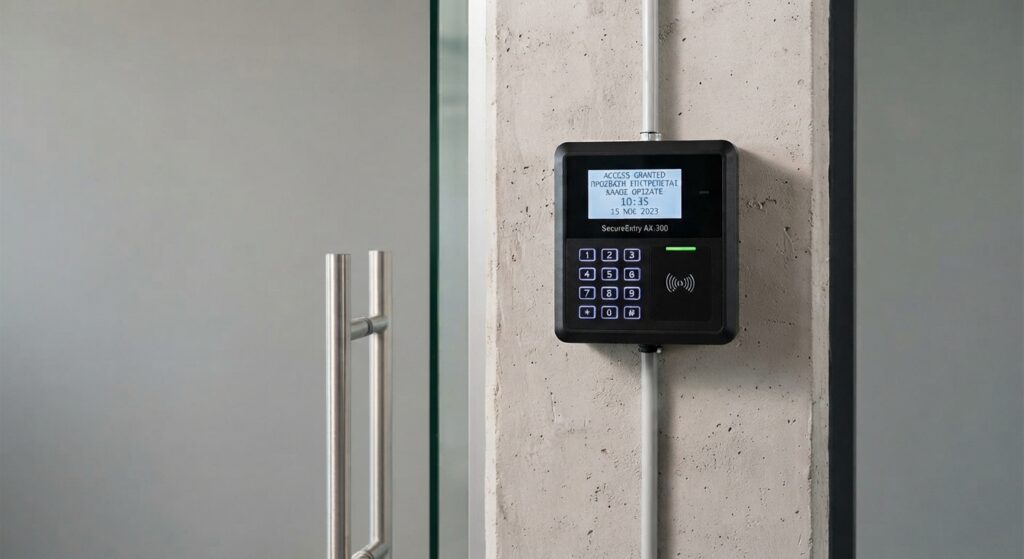
Controllers & Control Panels
Decides whether doors lock or unlock, storing access permissions and user history.
- Standalone units: for single entry points, with no computer connection.
- Networked units: central management of multiple doors through software.
The choice of controller determines whether the system can be expanded later.
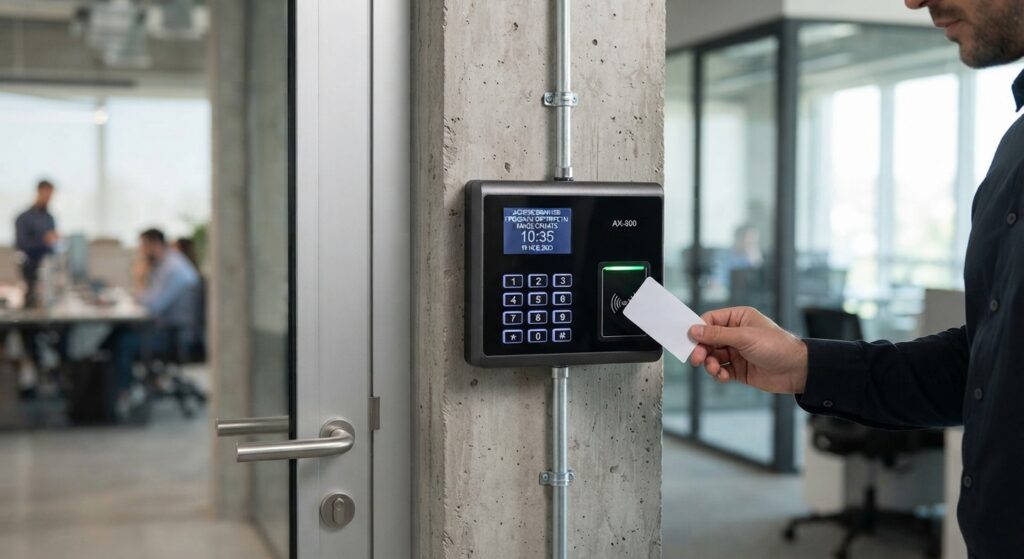
Readers & Keypads
Where users present their credentials — cards, key fobs or codes — to be allowed in.
- Proximity readers: very fast contactless reading, durable against heavy use and weather.
- Keypad systems: two-factor authentication (card + personal PIN).
On outdoor doors, the reader’s durability matters as much as its reading speed.
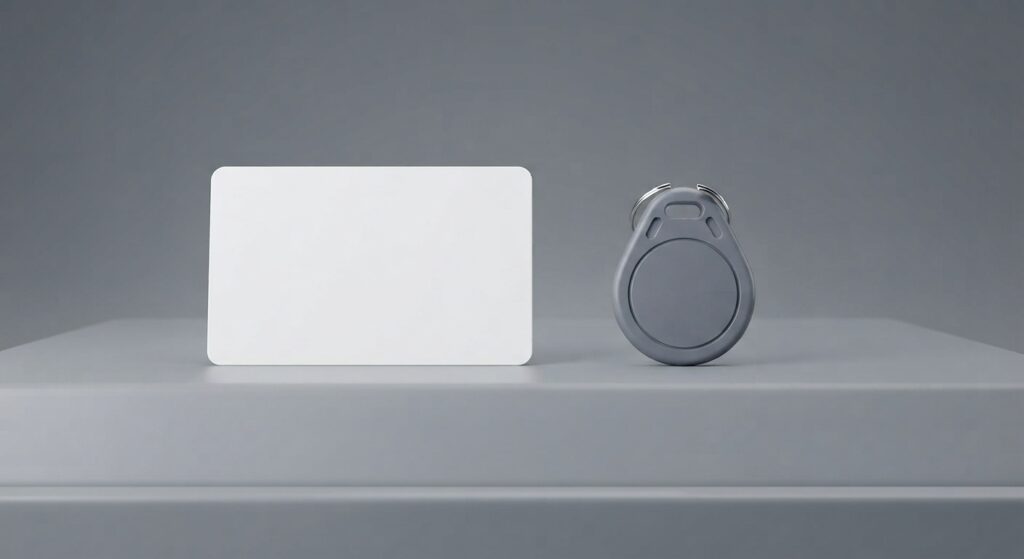
Access Cards & Key Fobs
Users’ personal credentials, which can be cancelled instantly if lost.
- Proximity tags: small, durable and practical for everyday use on a key ring.
- Credit-card-sized smart cards, with the holder’s details printed or additional technologies.
A printed card also works as a staff ID.
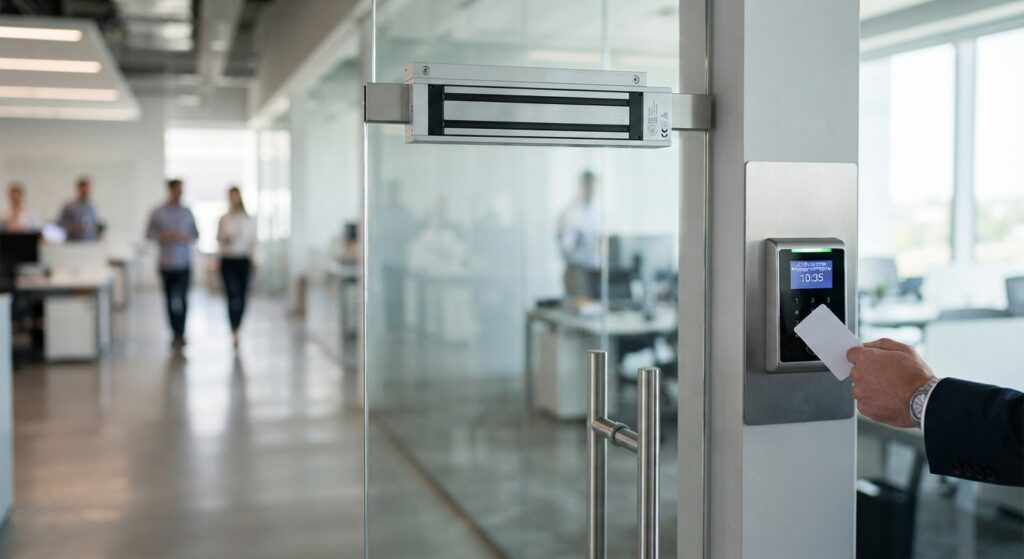
Electromagnetic Locks & Accessories
The mechanical and electrical hardware that locks the doors — glass, wood, metal or fire-rated.
- Electromagnetic locks (maglocks) and high-strength electric strikes.
- Exit buttons and emergency release systems for safe unlocking from the inside.
Emergency release is a safety requirement, not an optional extra.
If a card or tag is lost, it is deleted from the system immediately.
Monitor staff working hours with a complete movement history.
Start with one door and expand to the whole building whenever you need.